
Security As A Fragile Inheritance
The CallerThis flow traces how different households define safety and how childhood care, adult vigilance, and neglect shape people’s responses to danger.
increasing Bearing strength in each event
 decreasing
Bearing strength in each eventdecreasingA Childhood Of Reassurance

A Childhood Of Reassurance
Security remembered
Sejer recalls a childhood in which his mother held him and promised that illness, accidents, and loss would become bearable. He sees that assurance as a foundation for adult life.
Other children lack the foundation
He remembers a friend who was unwelcome in his own home and recognizes how neglect can leave a child without a secure place to return to.
The memory connects present crimes to early experiences of care. Sejer believes that security is learned through dependable relationships rather than guaranteed by circumstances.
Johnny’s Unsettled Home
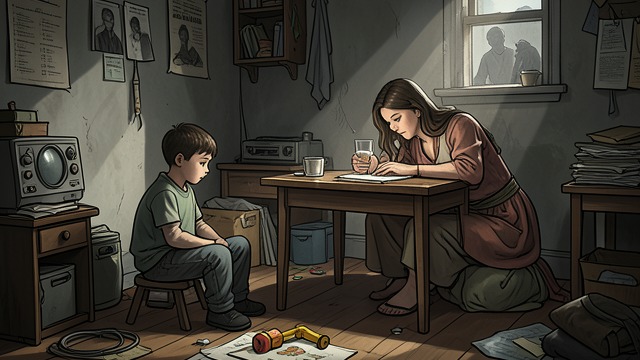
Johnny’s Unsettled Home
Neglect becomes ordinary
Johnny lives with a mother whose drinking and unstable attention make home unpredictable. He is left to manage much of his own time and resentment.
A search for an alternative
Henry’s home offers routine and welcome, while Johnny’s own home remains a place he dreams of escaping. He does not receive the consistent reassurance Sejer remembers from his childhood.
The contrast does not make Johnny’s actions inevitable. It shows how unequal access to care can shape what safety means to different characters.
A Garden Becomes Unsafe
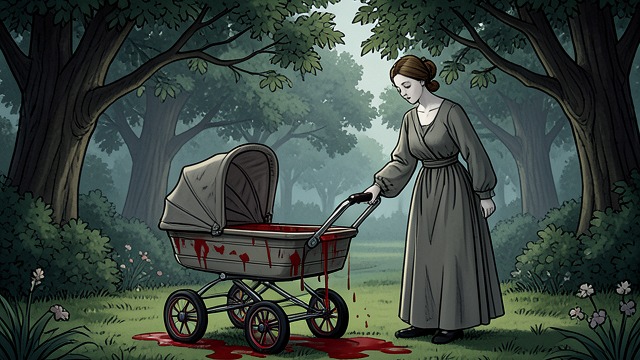
A Garden Becomes Unsafe
A familiar place invaded
The intruder reaches Margrete in the family garden, a setting Lily and Karsten had imagined as safe. Blood turns an ordinary pram into a scene of terror.
Security is stolen
Sejer later describes the harm as a theft of the parents’ security. The child is unharmed, but the parents can no longer treat the garden as an uncomplicated refuge.
The event makes safety feel vulnerable because the attacker uses familiarity itself as cover. The family cannot avoid fear merely by staying at home.
A Mother’s Constant Watch
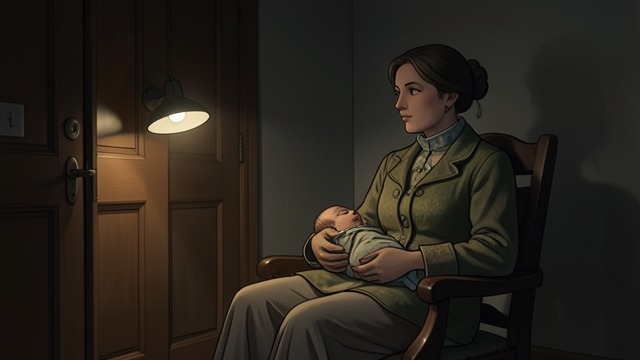
A Mother’s Constant Watch
Protection becomes vigilance
Lily keeps Margrete close, stays awake, and becomes reluctant to let the baby sleep beyond her sight. Her care takes the form of watching for any new danger.
Reassurance cannot erase memory
Karsten tells her the attacker will not return, but Lily remembers that they failed to hear the first intrusion. Her own experience outweighs his confident prediction.
The family’s response demonstrates how one violation can reorganize daily life. Safety is no longer an assumption; it becomes continuous labor.
A Community Without Ease
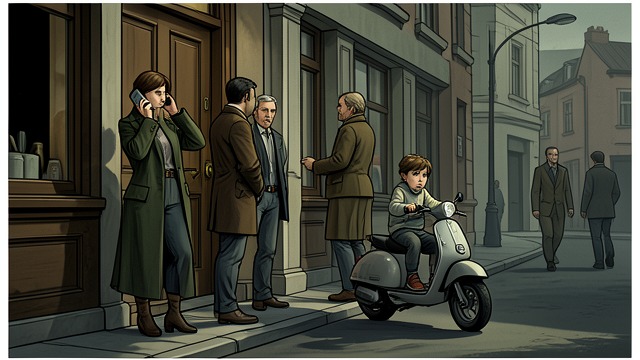
A Community Without Ease
Many households are changed
Gunilla fears the doorbell, Evelyn worries about Frances’s scooter, and the Landmarks have had death brought to their home. Theo’s family suffers an actual bereavement.
Security cannot be individually restored
The incidents reach different people through different means, but each undermines confidence in ordinary routines. The police can explain and investigate, but no single assurance returns the community to its earlier state.
The shared loss of security becomes more significant than any one prank. The novel presents safety as relational and collective, yet fragile under targeted deception.
during Sejer’s walk in the city
before his campaign is exposed
the evening of Margrete’s attack
several weeks after the first attack
after the campaign’s major incidents
